Fire safety guide
Stay put or simultaneous evacuation in Reading flats
A stay put policy relies on the walls and doors holding fire back. When that containment fails, everyone must leave at once. Find out what each approach means for your home in Reading and when the switch happens.
What a stay put policy actually means
Most purpose-built blocks of flats in Reading were designed so residents can remain inside if a fire starts elsewhere in the building. The walls, floors and doors between homes are built to hold back heat and smoke long enough for the fire service to arrive and put it out.
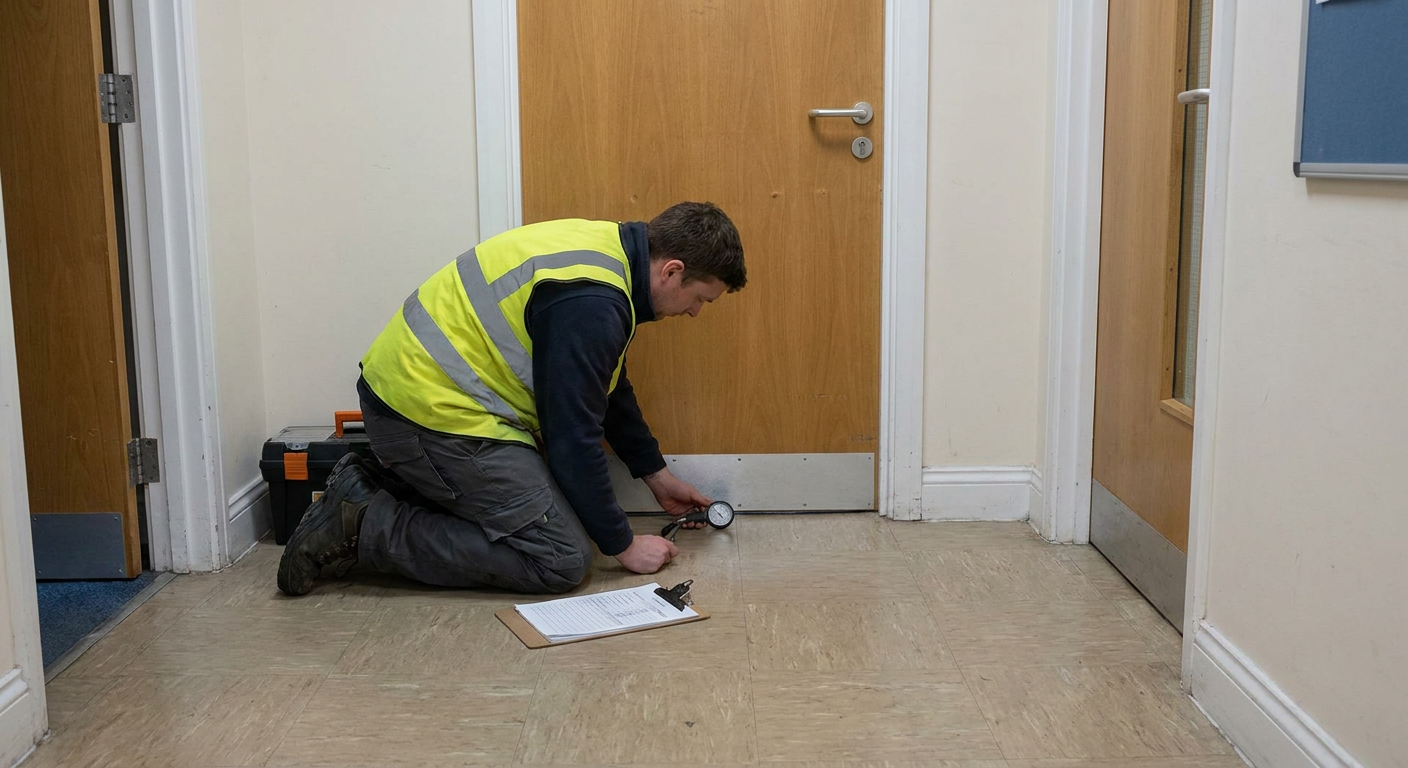
This only works if every barrier does its job. A propped-open door, a missing seal or a hole left by old pipework breaks the line of defence. When you notice gaps around frames or doors that no longer close properly, the compartmentation is compromised. A specialist firm carries out a [compartmentation survey](/compartmentation-survey-reading) to check every wall, floor and ceiling cavity in the shared parts.
Under a stay put policy, the flat where the fire starts evacuates. Everyone else stays behind their own front door. This prevents stairwells from filling with people and smoke at the same time. The responsible person for the building must make sure residents understand this rule, because leaving unnecessarily can block the escape route for those who genuinely need it.
When compartmentation cannot be trusted
Older conversions, buildings with timber frames or blocks where renovation work has left gaps in the structure do not always meet the standard needed for a stay put policy. If the walls and floors cannot reliably contain a fire for thirty to sixty minutes, staying inside becomes dangerous.
A [fire risk assessment](/fire-risk-assessment-reading) identifies whether the building fabric supports the current policy. The assessor checks the construction type, reviews past alterations and looks at how well the fire doors perform. If the findings show the barriers will not hold, the recommendation shifts to simultaneous evacuation.
Sometimes the problem is limited to one area. A single damaged riser shaft or a poorly sealed service duct might be fixed without changing the whole building strategy. But when the defects are widespread, the responsible person must act on the assessment and change the plan before a fire tests it.
Switching to simultaneous evacuation
Moving to simultaneous evacuation means every resident leaves the building as soon as an alarm sounds. This requires a detection system that reaches every flat, not just the communal corridors. In many cases, a Grade A alarm system covering both shared areas and individual homes becomes necessary.
The building also needs a clear, unobstructed route out. Stairwells must be free of stored items, and emergency lighting has to work during a power cut. A specialist firm drafts the new [evacuation plans](/fire-evacuation-plans-reading), mapping the routes and assigning roles so nobody is left guessing when the alarm goes off.
Until permanent alarms and detection are installed, the fire service often advises a waking watch. Trained staff patrol the building continuously, ready to raise the alarm manually. This is expensive and meant to be temporary, but it keeps people safe while the longer-term fix is arranged. The [responsible person](/rules/responsible-person-duties-reading) holds the duty to organise and fund these measures.
Fire doors under each policy
Under stay put, the front door of every flat is the primary barrier. It must resist fire and stop smoke from leaking through the edges. Intumescent strips swell when heated, sealing the gap, while cold smoke seals block fumes before the fire even takes hold.
Simultaneous evacuation still depends on fire doors, but they serve a slightly different purpose. They protect the stairwell so residents have a clean route down while the alarm is sounding. If a door on the corridor fails, smoke floods the escape path and traps people above the fire floor.
Regular checks matter under either arrangement. A specialist inspects hinges, closers, glazing and gaps to confirm each door performs as intended. The [fire door inspection](/fire-door-inspection-reading) records any faults and sets a schedule for repairs. Landlords managing converted houses or smaller blocks should follow the same routine, since worn doors fail faster than anyone expects.
Who decides which policy applies
The decision does not rest with individual residents. The responsible person for the building, usually the freeholder or managing agent, commissions the assessments and implements the findings. They record the chosen policy in the [fire strategy](/fire-strategy-reading), which sets out how the building manages risk from design through to daily use.
If you live in a flat and feel uncertain about what to do when an alarm sounds, ask to see the fire safety information for your block. The responsible person must provide it. Where confusion persists, arranging [fire safety awareness training](/fire-safety-awareness-training-reading) for residents helps clarify the procedure.
For buildings undergoing major changes, such as recladding or extensive internal refurbishment, the policy may shift temporarily. The contractor and the building owner must agree on interim measures and communicate them clearly. Silence breeds panic, and panic in a stairwell causes injuries.
Ask about your building's evacuation policy
Send details of your block and the concern you have noticed. A specialist firm will review the information and advise on the next step, with no obligation to proceed.
- No commitment required
- Local to Reading
- Clear written advice