Student housing
Student accommodation fire safety in Reading
Find out what the law requires for student lets and purpose-built blocks in Reading. Learn which alarm grades apply, how often doors need checking, and what must be ready before term starts.

Alarm grades for shared student houses
A student house let to six people in Reading is typically classed as a house in multiple occupation. The expected fire alarm grade depends on the layout and the number of storeys. Most shared houses require a Grade D1 system, which means mains-powered alarms with battery backup in every room where a fire might start, plus escape routes. Larger or higher-risk properties may need a Grade A panel system instead. The specialist firm carrying out the assessment will determine which category applies.
The difference between these systems matters because a Grade D setup covers detection inside individual rooms while a Grade A system links everything back to a central control panel. Getting this wrong leaves gaps in coverage. Read more about [fire alarm grades in Reading flats](/updates/fire-alarm-grades-in-reading-flats-grade-a-to-grade-d) to see how the categories work across different building types.
Landlords arranging student house fire safety checks should confirm the required grade before any installation begins. The assessment report will state exactly what is needed and where each detector should sit.
Fire door checks in purpose-built blocks
Purpose built student block fire rules follow the same legislation that governs other residential buildings containing multiple dwellings. Fire doors separating individual flats from communal corridors must be checked regularly. For buildings over eleven metres in height, the responsible person must arrange inspections of flat entrance doors at least once every twelve months, and communal fire doors more frequently.
In practice, many management companies schedule quarterly checks for corridor doors and annual checks for flat entrance doors. A student flat fire door inspection looks at the gap around the leaf, the condition of the intumescent seals, whether the closer shuts the door fully into the frame, and whether the hinges are secure. Any damage or modification by residents needs recording and fixing.
The specialist firm inspecting the doors will note defects against the standard and recommend remedial action. You can read more about what a [fire door inspection](/fire-door-inspection-reading) involves and how often checks should happen in the [fire door check frequency guide](/rules/fire-door-check-frequency).
Shared kitchens and firefighting equipment
Shared student kitchens present a specific risk because cooking is the most common cause of fires in rented accommodation. The question of whether a kitchen needs a fire blanket, an extinguisher, or both comes down to the findings of the fire risk assessment. In most shared student kitchens, a fire blanket mounted near the exit is the minimum expectation. It allows someone to smother a pan fire without needing training.
Extinguishers are sometimes recommended in larger communal kitchens, but placing one next to a cooker can encourage untrained students to tackle a fire they should simply evacuate from. The specialist firm conducting the assessment will weigh the size of the kitchen, the number of users, and the escape route before recommending equipment.
Any equipment provided must be maintained. Extinguishers need annual servicing and blankets should be checked for damage. Fire safety for a student let landlord means providing what the assessment specifies rather than adding equipment that might create false confidence.
Summer turnover and scheduling checks
The weeks between tenancies offer the best window for maintenance. Summer turnover fire checks in Reading student properties allow access to every room without disturbing occupants. This is when the specialist firm can carry out a full fire risk assessment review, test alarm systems, inspect fire doors, and verify emergency lighting.
Booking early matters. July and August are the busiest months for firms working across Reading's student areas. If you wait until late August, availability narrows. Arranging the work during June gives enough time for any repairs identified during the inspection to be completed before new tenants arrive.
The [checks before students move in](/rules/checks-before-students-move-in) page sets out what needs to happen during this period. It covers testing alarms under load, confirming escape routes are clear, and ensuring any compartmentation breaches found during the previous year have been sealed. Planning ahead avoids the rush and ensures the building is compliant on day one of the new academic year.
What must be ready before term starts
Before the first students collect their keys, several things need to be in place. A current fire risk assessment is the foundation. Without it, the responsible person cannot demonstrate that risks have been identified and managed. The assessment must reflect the building as it stands now, not as it was three years ago.
Alarms need testing and recording. Emergency lighting must function if the power fails. Escape routes must be unobstructed, with final exit doors opening freely without a key. Fire doors need to close properly on their self-closing devices. Any resident information, such as evacuation instructions, should be displayed in communal areas.
If the building is a purpose-built block, a [fire strategy](/fire-strategy-reading) document may already exist from construction. The responsible person should hold a copy and ensure current arrangements match it. For HMOs, the [responsible person duties](/rules/responsible-person-duties-reading) outline exactly what the law expects to be documented and maintained before occupation begins.
Managing resident behaviour
Students wedging fire doors open or covering smoke detectors with tape or bags is a recurring problem in shared accommodation. These actions defeat the safety measures the building relies on. The responsible person has a duty to manage this behaviour through information and enforcement.
Providing clear guidance at the start of the tenancy helps. Many landlords include fire safety expectations in the tenancy agreement and run through them during sign-up. [Fire safety awareness training](/fire-safety-awareness-training-reading) designed for staff managing student accommodation can also equip wardens and property managers to spot and address tampering quickly.
Regular walk-throughs of communal areas identify wedged doors or damaged detectors before they become a long-term habit. Where problems persist, the management company needs a process for issuing warnings. If a building relies on a stay-put policy, compromised doors or covered detectors change the entire evacuation strategy, so maintaining them is essential.
Inspections by the council and university
Private student lets in Reading fall under the jurisdiction of Reading Borough Council, not the universities. The council's environmental health and housing standards teams enforce the Housing Act and fire safety legislation. They can inspect properties, issue improvement notices, and restrict occupation if conditions are unsafe.
Universities maintain lists of approved accommodation, but inclusion on those lists does not replace statutory obligations. A university may set additional standards for properties it recommends, yet the legal responsibility remains with the landlord or managing agent. If the council identifies a serious breach, it can serve a [fire safety enforcement notice](/rules/fire-safety-letter-or-notice) requiring immediate action.
The specialist firm producing the fire risk assessment works to the legal standard. Their report provides evidence that the responsible person has taken reasonable steps to comply. Keeping this documentation current and accessible protects the landlord during any council inspection or enquiry.
Related services
Fire safety services for student housing
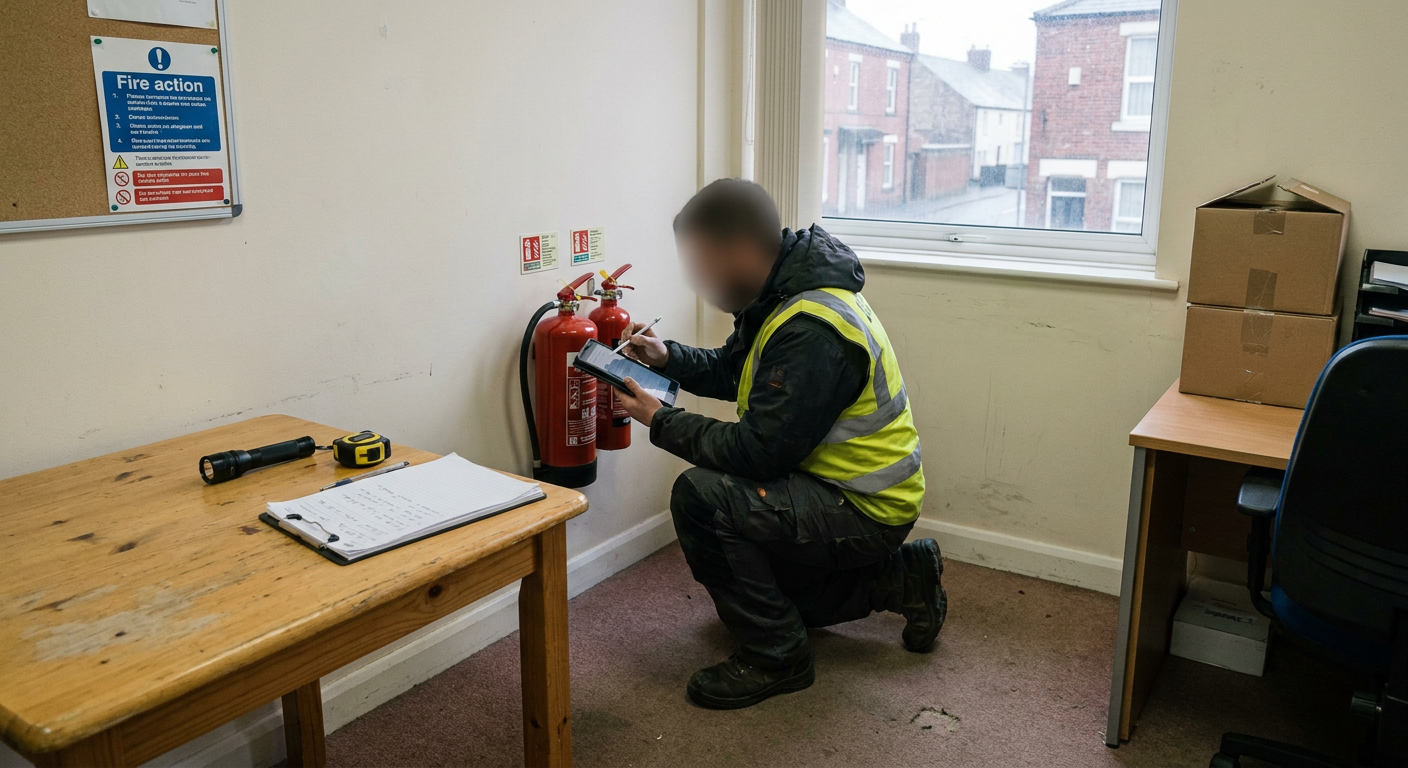
HMO fire risk assessment
Assessments for shared houses occupied by multiple unrelated tenants, identifying hazards and required precautions.
Compartmentation survey
Checking walls, floors and ceilings in purpose-built blocks to confirm they will contain fire and smoke.
Fire evacuation plans
Documented escape routes and procedures tailored to student buildings, including provisions for visitors.
Nominated person service
A named individual to handle fire safety responsibilities when the landlord or manager is unavailable.
Health and safety reports
Broader reports covering general safety alongside fire risks in managed student accommodation.
Questions about student fire safety
What alarm grade is expected in a student house let to six?
Most six-person shared houses in Reading require a Grade D1 system, meaning mains-powered alarms with battery backup in risk rooms and escape routes. Larger or higher-risk layouts may need a Grade A panel system. The specialist firm determines the correct grade during the assessment.
How often should fire doors be checked in a student block?
For purpose-built blocks over eleven metres, flat entrance doors need annual checks and communal fire doors require more frequent inspection, often quarterly. The exact schedule depends on the building's fire strategy and the findings of previous inspections.
Do shared student kitchens need a fire blanket or extinguisher?
A fire blanket mounted near the kitchen exit is the typical minimum requirement. Extinguishers are sometimes specified for larger communal kitchens, but the specialist firm bases this on the risk assessment rather than applying a blanket rule.
Can fire safety checks be done during summer turnover?
Yes. The period between tenancies is the best time for inspections because every room is accessible. Booking in June or early July ensures the specialist firm has availability before the September rush begins.
What do I need in place before the first students move in?
You need a current fire risk assessment, tested alarms, functioning emergency lighting, clear escape routes, and properly closing fire doors. Any resident information or evacuation instructions must be displayed in communal areas.
How do I deal with students wedging doors or covering detectors?
Address it through tenancy agreements, induction briefings, and regular walk-throughs. Management staff can receive specific training to identify and respond to tampering before it compromises the building's fire strategy.
Does the university or council inspect private student lets?
Reading Borough Council enforces fire safety and housing standards in private lets. Universities may set criteria for approved accommodation lists, but statutory enforcement rests with the council's housing and environmental health teams.
How much does an assessment cost and how quickly is it booked?
Costs vary by property size and complexity. Availability tightens significantly in late summer, so enquiring early secures a date. The specialist firm quotes based on the building type and the scope of work required.
Arrange fire safety for your student let
Send details about the building and the specialist firm will respond with availability and what the work involves. There is no obligation to proceed beyond the initial conversation.
- No commitment required
- Local specialist firms
- Quick response