Compartmentation survey
Compartmentation survey in Reading
A compartmentation survey reading hidden voids, risers and service penetrations reveals where fire can spread between rooms or floors. The specialist opens sample areas to find breaches that sit above ceiling tiles or behind plasterboard, then reports what needs sealing.
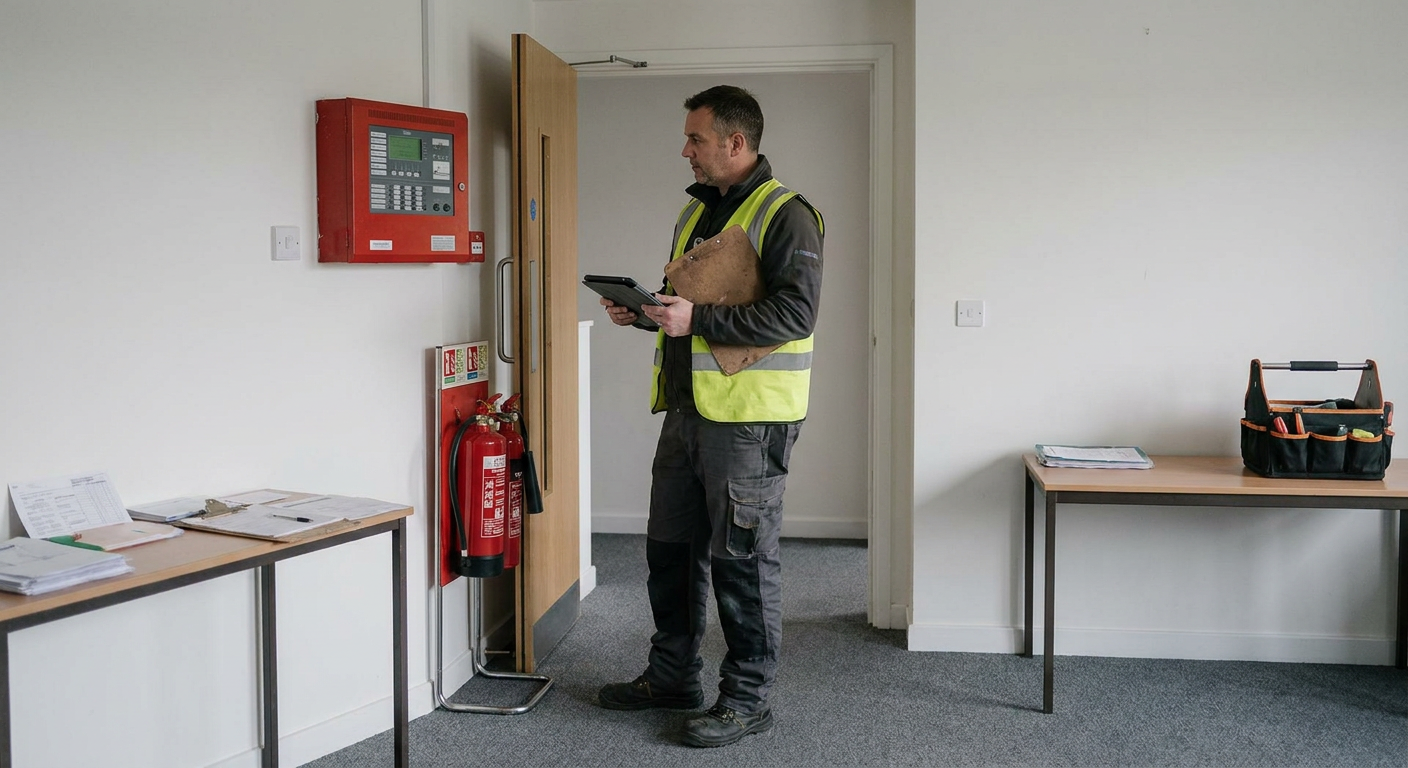
Visual check or opening up concealed voids
Some breaches hide above ceilings and inside risers. Opening sample areas shows the true condition of fire barriers in a building.
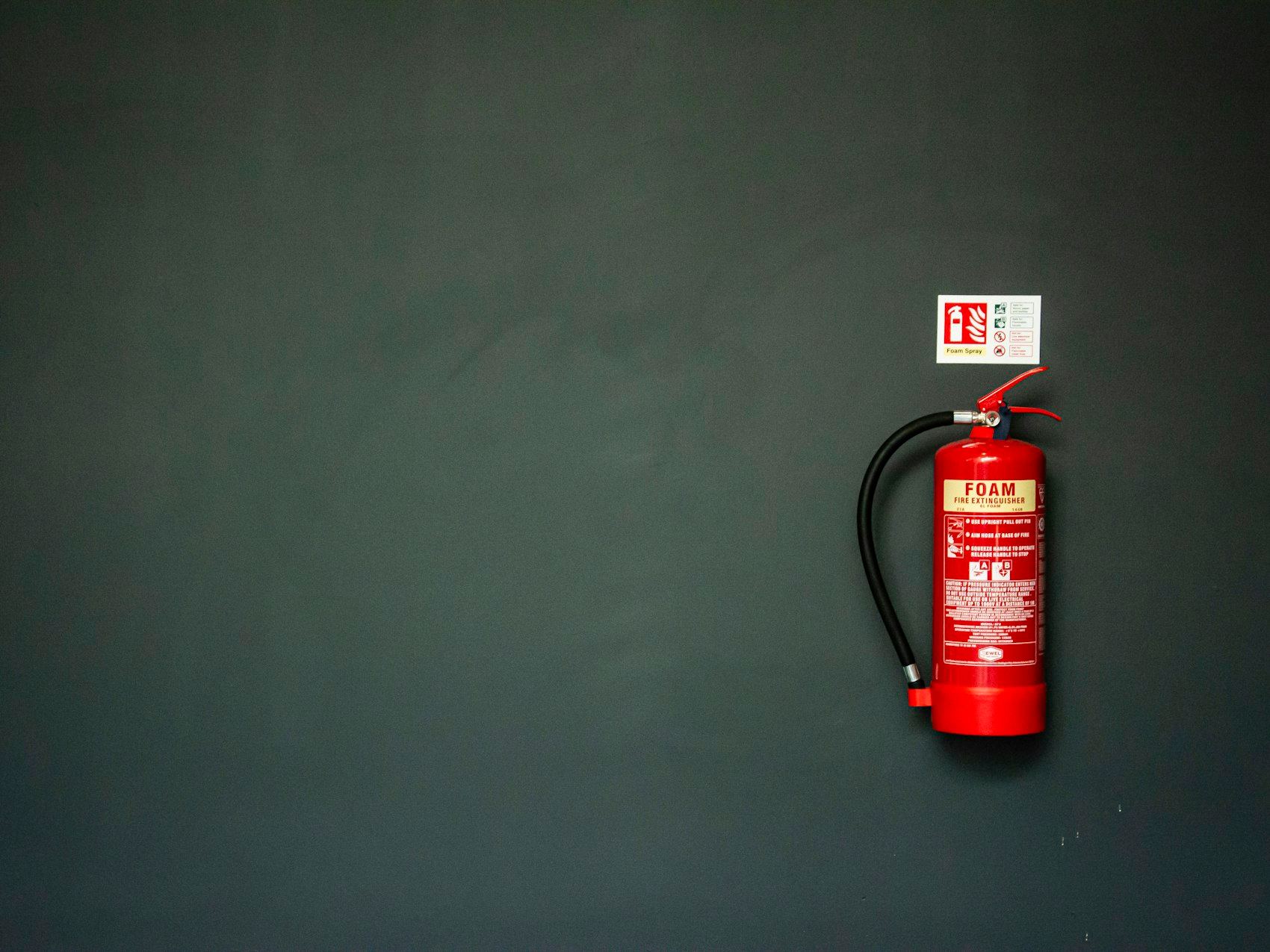
What is examined
- Visual inspection only
- Visible walls, doors and accessible panels are checked for obvious gaps.
- Survey with sample openings
- Ceilings are lifted and risers opened so hidden voids are inspected directly.
Hidden breaches
- Visual inspection only
- Gaps above suspended ceilings or behind trunking remain unseen.
- Survey with sample openings
- Breaches in concealed spaces are found by lifting representative tiles.
Report detail
- Visual inspection only
- The report notes visible defects but cannot confirm unseen barriers.
- Survey with sample openings
- Each opened area is photographed and mapped against the floor plan.
The specialist advises which approach suits after examining the building type and age.
How the survey works from start to finish
- 1
Enquiry and scoping
You describe the home or block. The specialist firm confirms the scope and agrees a date for the visit.
- 2
Site visit and sampling
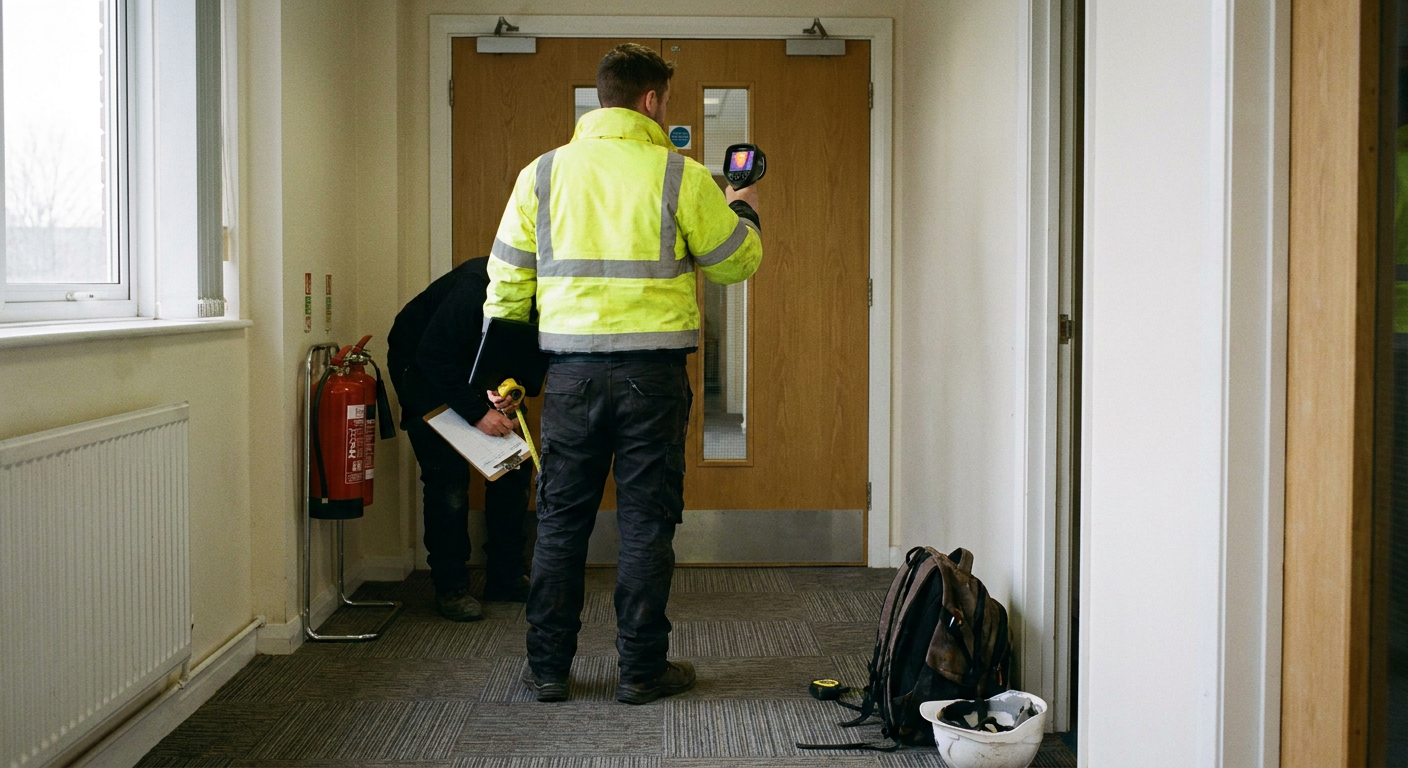
The surveyor lifts ceiling tiles and inspects risers, looking at service penetrations and cavity barriers across sample areas.
- 3
Photographic record
Every breach found during the above ceiling fire survey is photographed and marked on a drawing of the layout.
- 4
Written report
You receive a document listing each defect, its location and the standard needed to correct it.
Why insurers ask
What a compartmentation survey finds
Insurers request a compartmentation check in Reading when they need proof that fire cannot travel freely between flats or commercial units through shared voids.
The surveyor opens sample areas because pipes, cables and ducts pass through walls above suspended ceilings. A visual walk-through misses those hidden routes entirely.
Opening tiles leaves small access points. The specialist firm explains how many will be lifted and who makes good any disturbed plasterboard or paintwork afterwards.
Sample numbers depend on the building size, age and layout. Older blocks with multiple past alterations usually require more openings than newer builds with documented fire stopping.
The specialist examines hidden barriers above ceilings, inside risers and at service penetrations. They open small sample areas to find breaches that sit out of sight, then report the defects with photographs and floor plan locations.
For a block of flats, a cavity barrier survey checks the horizontal and vertical stops within external walls and roof spaces that prevent flame spreading behind cladding or masonry.
What you receive after the visit
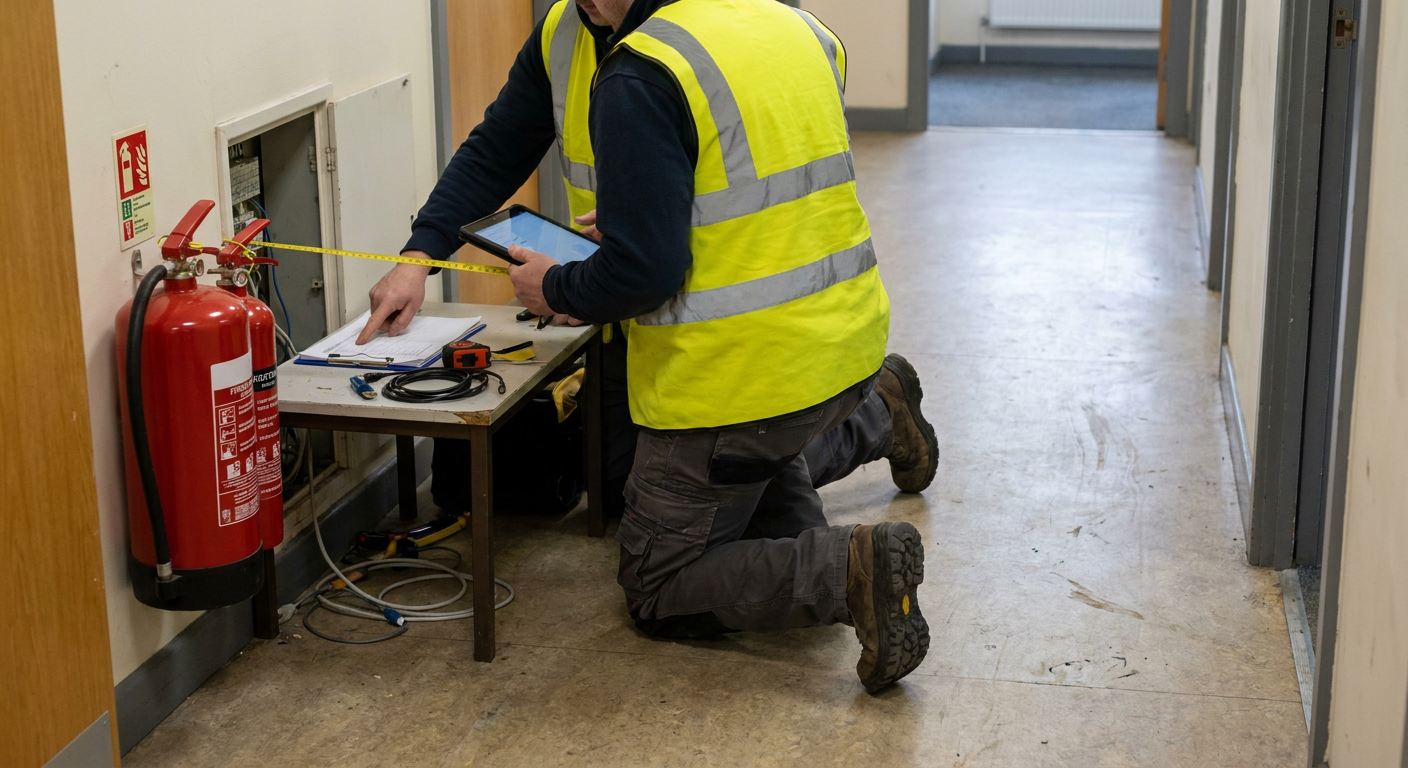
The report records what the surveyor found, where each breach sits and what standard applies. It gives you evidence to act on rather than assumptions about hidden spaces.
Annotated floor plans
Each breach is plotted on a drawing of your layout so contractors know exactly where to work without searching.
Photographic schedule
Images of every opened area show the gap, missing seal or damaged barrier so the problem is clear before anyone visits.
Remedial specification
Notes on the fire rating required for each repair guide the contractor who quotes for and carries out the fixing work.
Areas covered around Reading
The specialist firms taking enquiries through this site work across Reading and its surrounding neighbourhoods. A fire barrier inspection in Reading follows the same standards as one booked in nearby towns.
If your street falls outside these areas, send an enquiry to check availability.
Ask about a compartmentation survey
Send details of your building and the reason for the enquiry, such as an insurer request. The specialist firm replies with availability. Sending this does not commit you to booking anything.
- No obligation to book
- Reply within working hours
- Scope agreed before any visit