Fire safety guide
How often must fire doors be checked?
Find out how often flat entrance doors and communal doors need checking, what a routine look records compared with a full inspection, and what the law requires for blocks in Reading.
Flat entrance door checks frequency in Reading blocks
If you manage a block of flats in Reading, the law sets specific intervals. The Fire Safety (England) Regulations 2022 require the responsible person to check flat entrance doors at least once every twelve months where the building rises above eleven metres. For buildings over eighteen metres, quarterly checks apply to all communal doors too. So if someone asks how often must fire doors be checked, the answer depends on the height of the building.
These rules came into force after the Grenfell Tower Inquiry. They apply across Berkshire, so a block in Whitley follows the same schedule as one in Earley or central Reading. The responsible person holds the duty, even if a managing agent handles day-to-day tasks. Missing these dates leaves leaseholders exposed and can lead to enforcement action from the local fire authority.
Routine checks versus a full fire door inspection
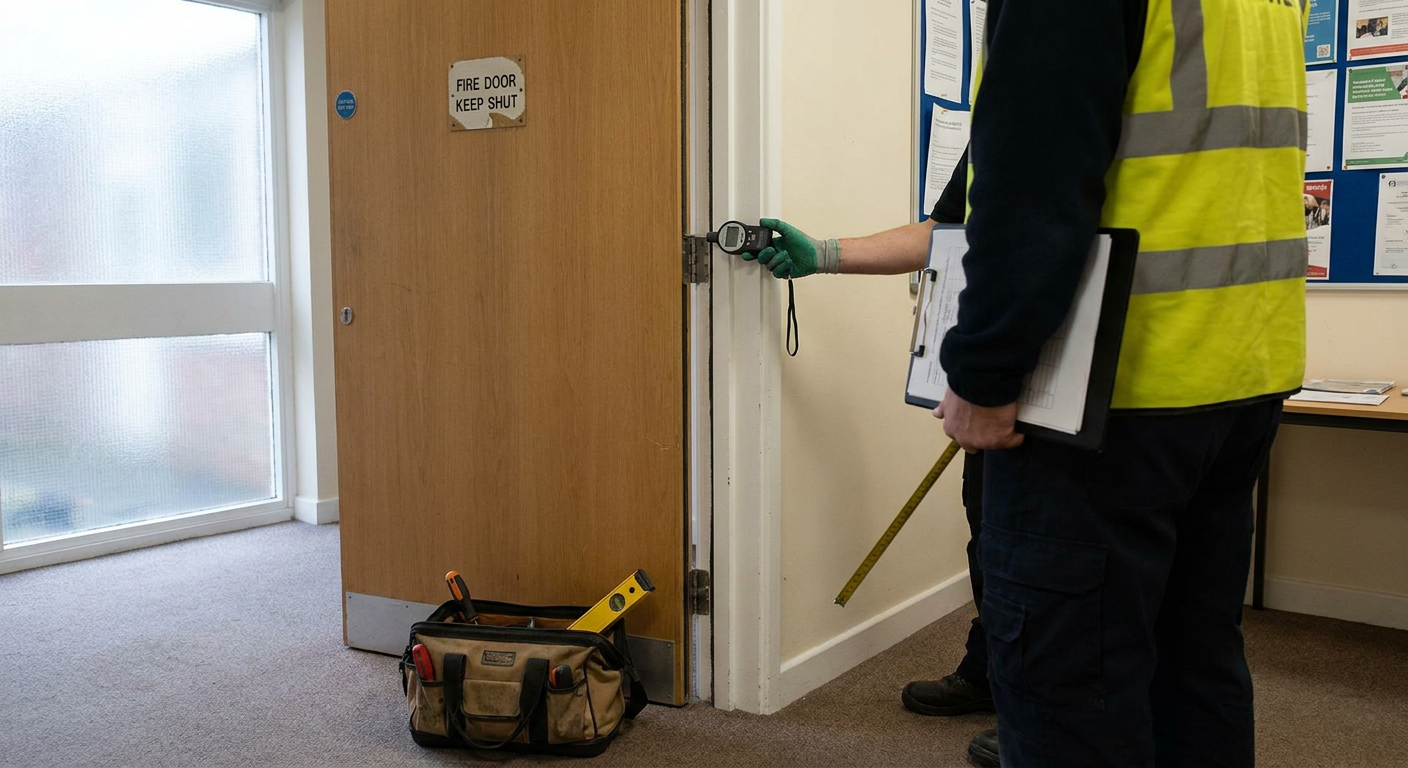
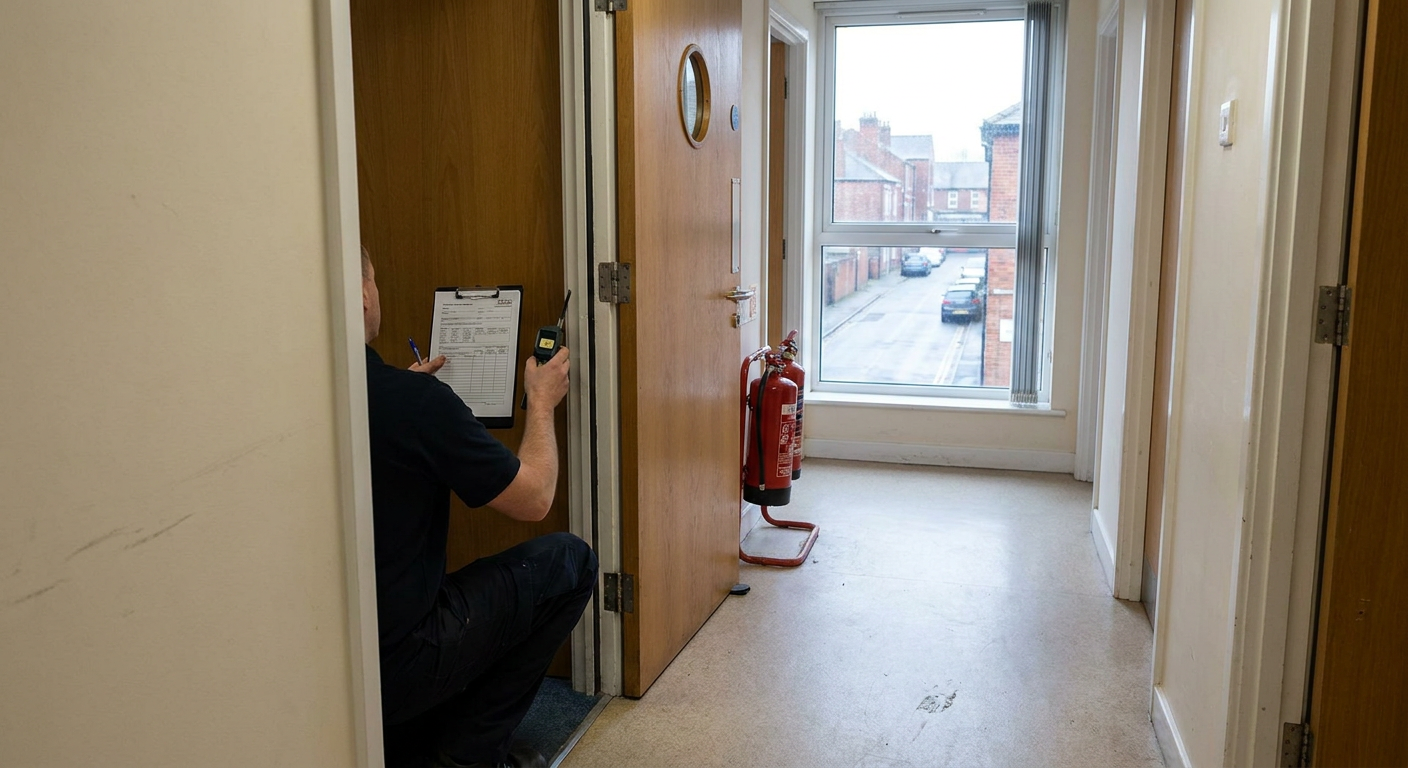
A routine check is a visual task. Someone walks the corridors and looks at each door. They note whether the self-closer shuts the door fully into the frame, whether the intumescent seals are intact, and whether there is visible damage to the leaf or glazing. This forms the basis of a quarterly fire door checklist for taller buildings.
A full fire door inspection goes much further. A specialist firm measures the gaps around the leaf with feeler gauges, tests the closer speed, examines the hinges for missing screws, and checks that the correct certification label is present. That level of detail belongs to a professional fire door survey, which a specialist carries out periodically rather than every quarter. If you need a fire door inspection in Reading, a specialist will record findings against the relevant British Standard and state clearly whether each door passes or fails.
Getting inside flats when a leaseholder refuses
Checking a flat entrance door means looking at both faces. The corridor side is straightforward, but the flat side requires access. The responsible person must make reasonable efforts to arrange entry. Written notice, polite reminders, and offering flexible appointment times usually work.
If a leaseholder refuses outright, document every attempt. Enforcement notices exist for persistent refusal, but most disputes resolve before that stage. A nominated fire safety person can help coordinate access across multiple flats. Keeping a log of refusals protects the responsible person if an incident occurs and questions arise about compliance. The regulations expect effort, not perfection, but ignoring a blocked door defeats the purpose of the compartmentation strategy that keeps residents safe.
What gets recorded and who can inspect fire doors
A routine check needs a written record. Note the date, the door location, the condition of the closer, seals, hinges and any damage spotted. Photographs help. This log answers the question of what exactly gets recorded on a routine door check and whether it satisfies the fire service. Inspectors from Royal Berkshire Fire and Rescue Service expect to see dated evidence that checks happened on time. For routine visual checks, the responsible person or a caretaker can do the work. No formal qualification is mandated by the regulations for the quarterly walk-round. But a full inspection demands competence. When people ask who can inspect fire doors to a standard that holds up, the answer is a specialist with training in passive fire protection.
Failed doors, repairs, and building insurance
If a door fails a check, fix it promptly. The regulations do not prescribe an exact number of days, but leaving a broken closer on a flat entrance door means smoke can spread into the escape route immediately. Urgent defects need urgent attention. A specialist firm can advise whether a repair restores compliance or if the whole leaf needs replacing.
Building insurers increasingly ask for maintenance logs. If a fire occurs and the insurer discovers that communal fire door checks were never done, they may dispute the claim. Keeping a clear audit trail of every routine check and every specialist survey protects the freeholder and the residents. It also demonstrates that the responsible person took their duties seriously under the Regulatory Reform (Fire Safety) Order 2005.
What affects the cost of a fire door survey
Every block differs in size, age, and layout, so the amount of work a specialist must do changes from building to building.
The specialist explains the exact cost for your block before any work is agreed.
- Number of doors
- More flat entrance doors and communal doors mean more time spent measuring, testing, and recording each one individually.
- Building height and access
- Taller blocks in central Reading require scaffolding or special equipment to reach some doors, adding to the labour involved.
- Door type and age
- Older timber doors take longer to assess than modern sets because wear patterns vary and replacement parts may be hard to source.
- Level of reporting needed
- A basic pass-fail list costs less than a detailed report with photographs, remedial specifications, and priority ratings.
Ask about a fire door check for your home
Send details about your block. A specialist will read them and reply with advice on what your doors need next. There is no obligation to book anything.
- No commitment required
- Local specialist firms
- Clear written replies