Regulations guide
Fire safety regulations 2022 for flats in Reading
Find out what the fire safety England regulations 2022 duties require from blocks of flats. This covers resident information, door checks and what must be sent to the fire service.
Who the 2022 regulations apply to in Reading
The fire safety regulations 2022 flats rules apply to every block of flats in England with two or more domestic premises and shared parts. So they cover a small block in Reading just as they cover a tall tower. If a block is under eleven metres, obligations still apply. These include providing a resident fire safety information leaflet and keeping common areas safe. Taller buildings face additional requirements for high rise building information fire service submissions and wayfinding signage. Every responsible person block of flats must understand which tier applies to their building. Fire safety compliance Reading flats demands starts with knowing where a building sits. A specialist can confirm the exact duties after reviewing the structure. Read more about [responsible person duties](/rules/responsible-person-duties-reading) and how they are defined in law.
Information residents must receive and how often
Every resident must be given fire safety instructions when they move in and again whenever those instructions change. For existing residents, this information must be provided at least once every twelve months. The instructions cover how to evacuate, how to report a fire and what the building's fire safety arrangements are.
This is usually delivered as a resident fire safety information leaflet left through the letterbox or handed over directly. It does not need to be a lengthy document, but it must be clear enough for someone unfamiliar with the building to follow during an emergency. If the building has a stay put policy, the leaflet must explain why and when that might change.
Keeping records of when these leaflets were distributed matters. If the fire authority asks for proof, the responsible person needs to show it was done. Guidance on [evacuation plans](/fire-evacuation-plans-reading) explains what those instructions should contain and how they relate to the building's overall strategy.
What must be sent to the fire service
Buildings over eighteen metres, or those with more than seven storeys, must provide specific information to the local fire and rescue service. This includes up-to-date floor plans, details of the external wall system and information about firefighting equipment such as dry risers or lifts intended for fire service use.
This high rise building information fire service submission helps firefighters plan their response before arriving at the scene. The information must be kept in a secure box on site and updated whenever the building changes materially. Electronic copies must also be shared with the fire service.
Smaller blocks in Reading do not need to make these submissions, but the responsible person still needs to ensure firefighters can access the building and locate key infrastructure. A [fire strategy](/fire-strategy-reading) prepared by a specialist sets out how access and information should be managed for any size of building.
Door checks and wayfinding signage
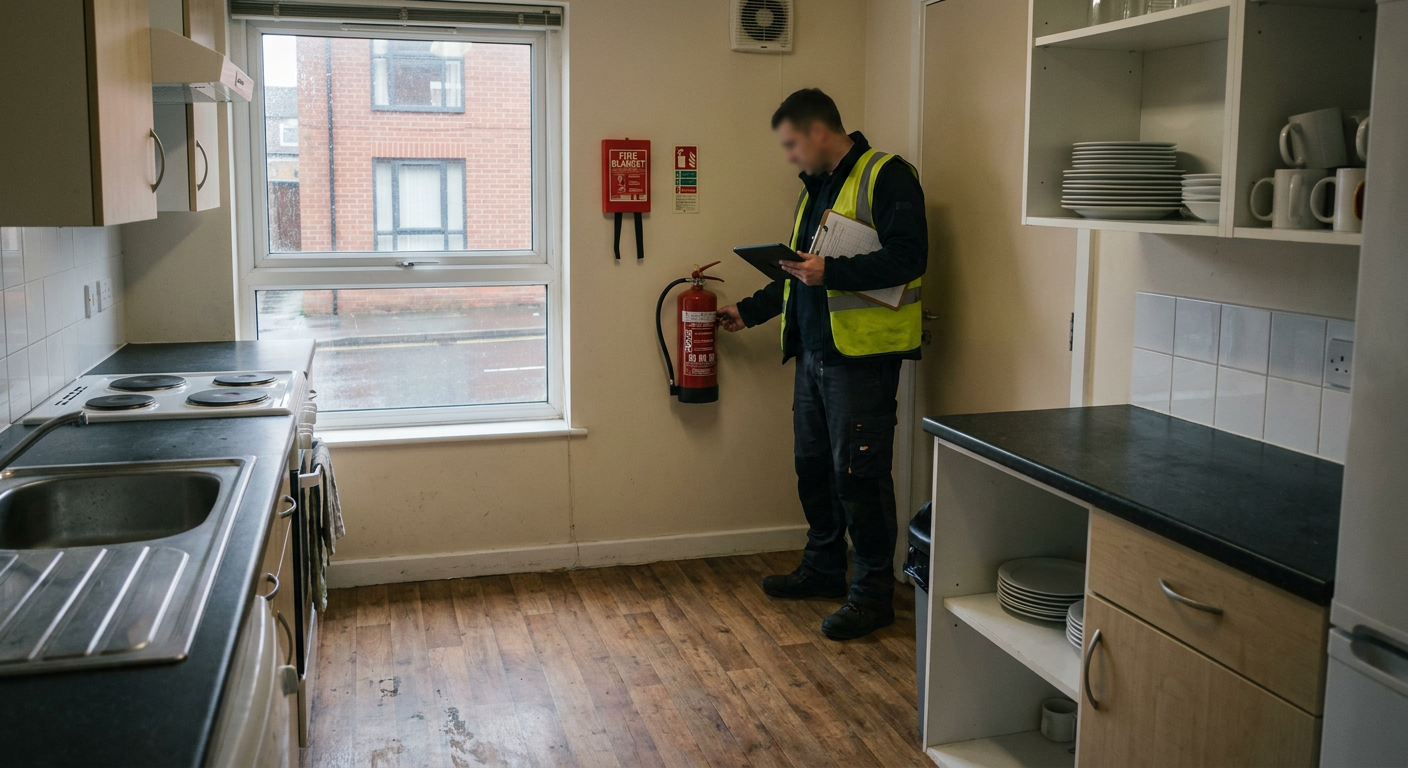
For buildings over eleven metres, the responsible person must arrange checks of all fire doors in common parts at least every three months. Flat entrance doors in those same buildings must be checked at least once every twelve months. The specialist carrying out a [fire door inspection](/fire-door-inspection-reading) looks at gaps, seals, hinges and self-closing devices.
Wayfinding signage is required in buildings over eighteen metres. Floor numbers and flat indicators must be visible even in low light or smoke. Putting this signage in place involves surveying each landing and stairwell to determine where signs are needed and fixing them securely.
The amount of work depends on the number of doors and the layout of the staircases. A four-storey block in Earley will need fewer checks than a fifteen-storey tower near the town centre. Understanding [how often fire doors must be checked](/rules/fire-door-check-frequency) helps plan the schedule so nothing is missed.
The responsible person in leasehold blocks
In a leasehold block with a managing agent, the responsible person is typically the freeholder or the management company. The managing agent may carry out the day-to-day tasks, but the legal duty rests with whoever controls the common parts. This means the freeholder cannot delegate liability simply by hiring an agent.
If you live in a block in Whitley or Caversham and are unsure who holds this role, check your lease or ask the managing agent directly. The responsible person must ensure the fire risk assessment is current, doors are checked and residents receive their information. They may appoint a [nominated person](/nominated-person-service-reading) to handle daily oversight, but accountability remains with the duty holder.
Confusion over this role is one reason fire safety compliance Reading flats requires falls behind. Clarifying who is responsible is the first step before any physical work begins.
Consequences of falling behind on these duties
Failing to meet the fire safety England regulations 2022 duties can lead to enforcement action. The fire authority may issue an enforcement notice requiring specific steps within a set timeframe. In serious cases, prohibition notices can restrict the use of parts of the building until hazards are resolved.
Beyond formal notices, there is the practical risk that a fire exposes gaps in preparation. If a resident is harmed and the responsible person cannot demonstrate compliance, the legal and financial consequences are severe. Insurance policies may also be affected if mandatory checks have been skipped.
One specialist firm can handle the assessment, door inspections and the preparation of resident information together, reducing the coordination burden on the responsible person. If you have received a [fire safety letter or notice](/rules/fire-safety-letter-or-notice), acting quickly limits the scope of enforcement.
What affects the cost of meeting the 2022 duties
Every block differs in size, age and layout, so the work required to meet the regulations varies from building to building.
| What it depends on | Why it matters |
|---|---|
| Number of storeys and flats | More floors and doors mean more inspections, longer surveys and additional signage to install. |
| Building height category | Towers over eighteen metres require fire service submissions and wayfinding signs that smaller blocks do not. |
| Condition of existing doors | Doors that already close properly and have intact seals take less time to inspect than damaged ones. |
| Access to common parts | Gaining entry to locked plant rooms or roof spaces adds time if keys or escorts are needed. |
| Resident turnover rate | Blocks with frequent moves require more leaflets and instruction sessions throughout the year. |
The specialist explains the full cost of the particular job before anything is agreed.
Ask about your block's fire safety duties
Send the details of your building and what you need to know. The enquiry goes to a specialist firm who will respond with next steps. There is no obligation to proceed.
- No commitment required
- Local specialists only
- Plain answers given