Fire door inspection
Fire door inspection in Reading
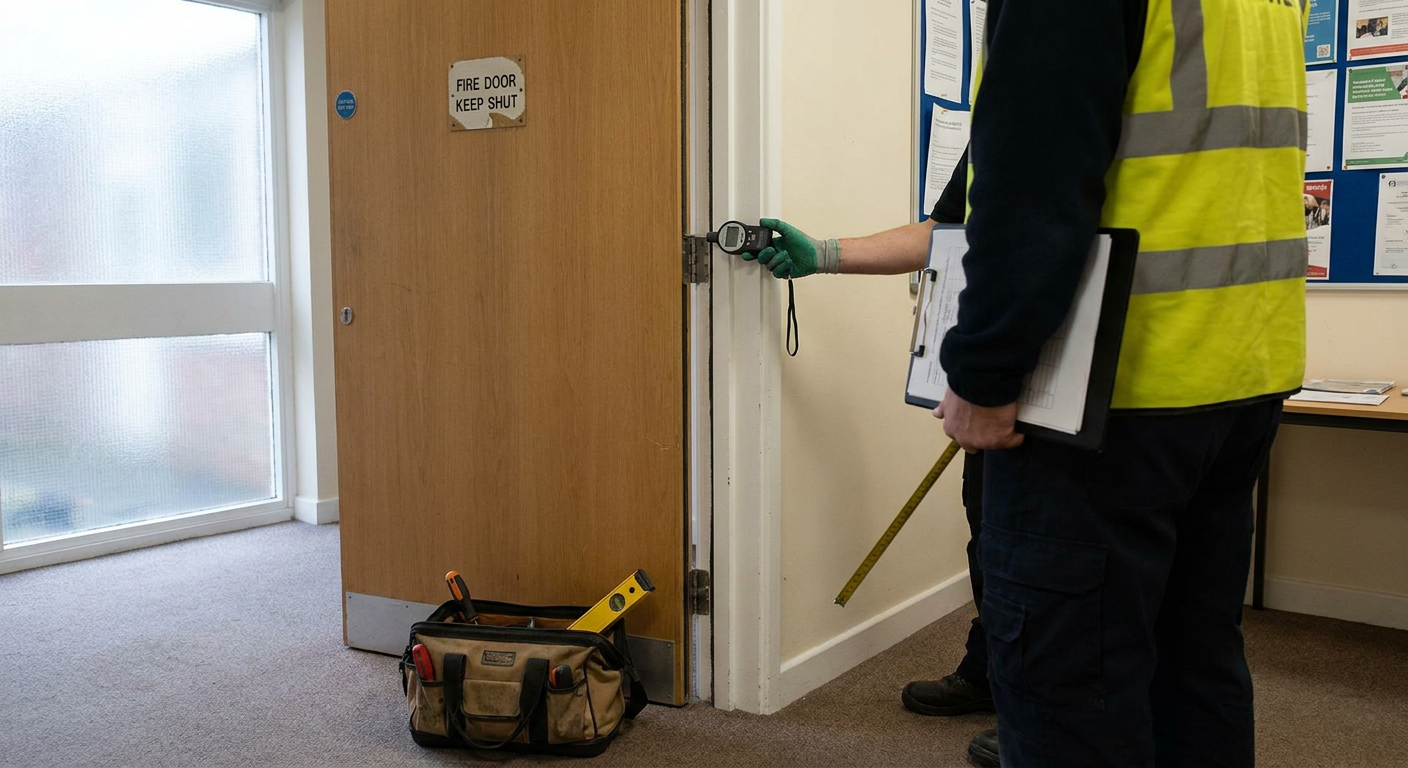
If you manage a block of flats or an HMO in Reading, a fire door check may be overdue. A specialist inspector examines every door, from the closers to the glazing, and produces a schedule of findings. Send an enquiry to arrange a visit.
- Door-by-door written schedule
- Covers gaps, seals and hardware
- Arranged for Reading buildings
Send an enquiry
What gets checked
What a fire door survey in communal areas covers
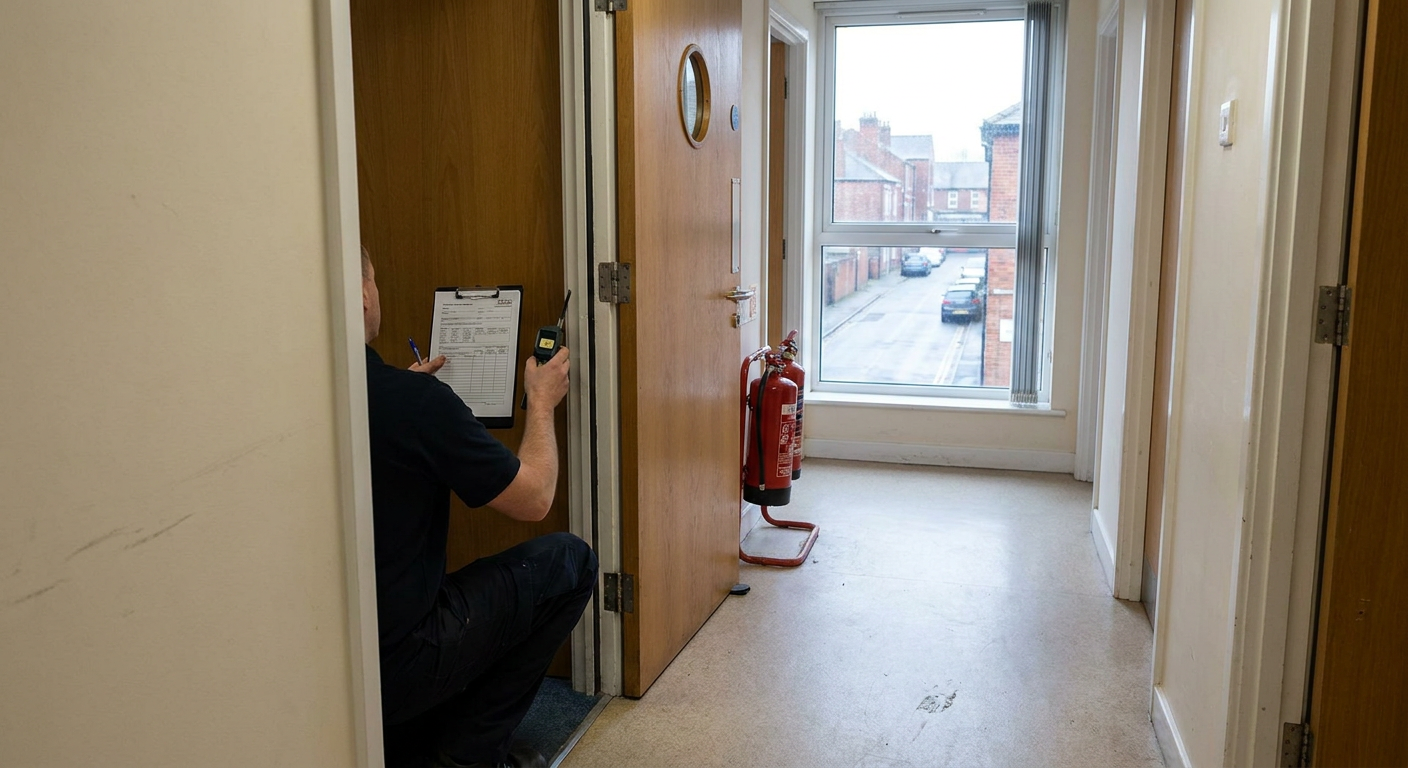
- Gaps around the frame
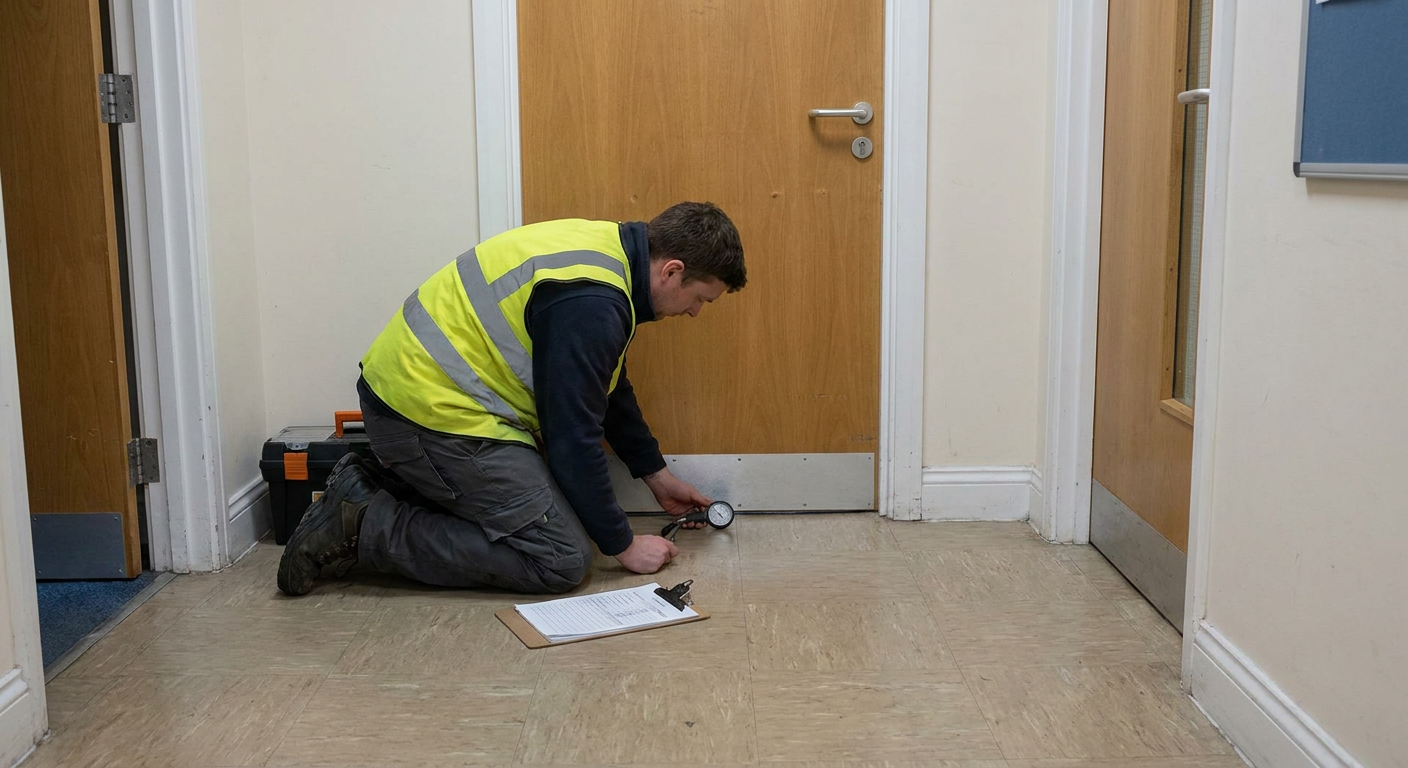
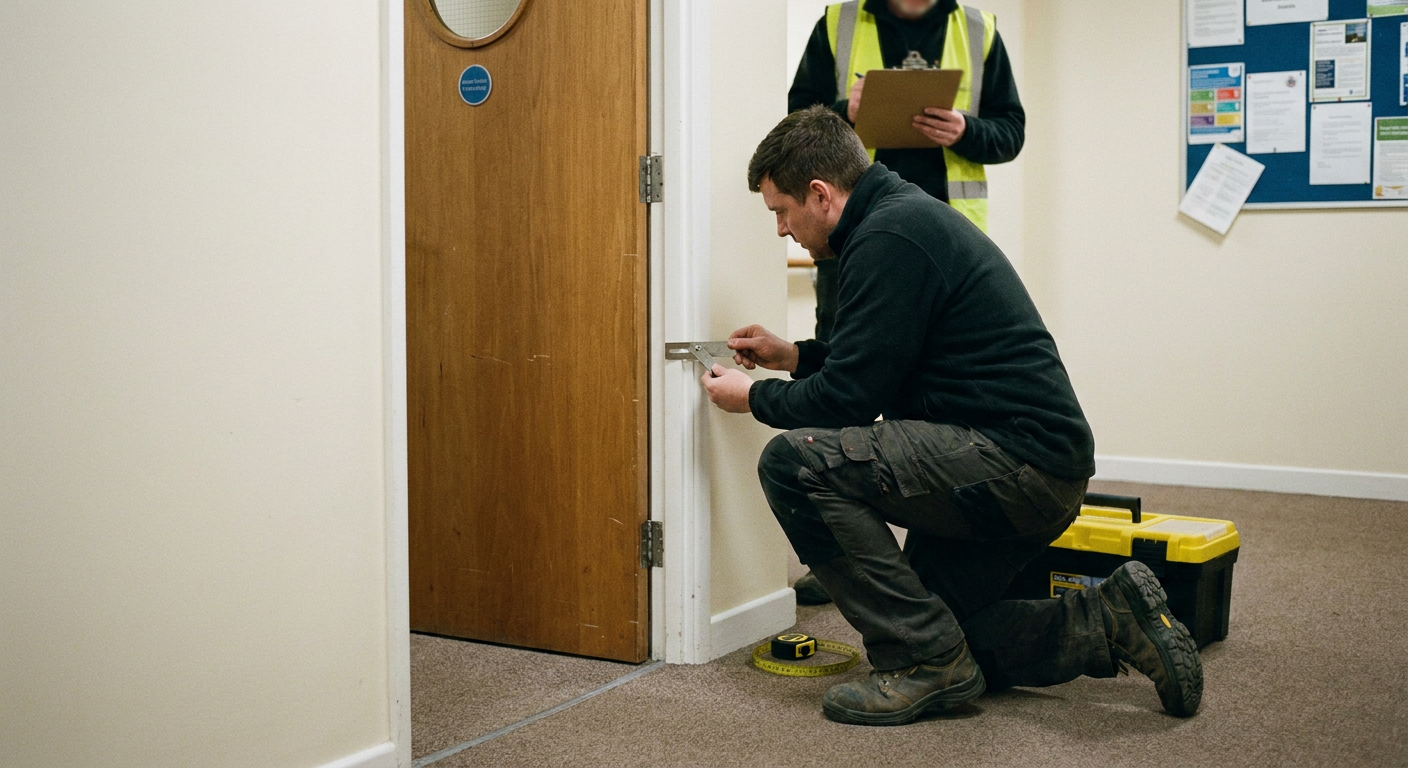
- An inspector decides whether the gap round a fire door is too wide by measuring it against the limits set in the relevant British Standard, usually no more than three millimetres.
- Intumescent strips and seals
- Intumescent strips swell when heated to seal the gap between door and frame. The inspector checks they are present, undamaged and correctly fitted so they still work.
- Self-closing devices
- A fire door closer inspection in Reading confirms each mechanism shuts the door fully into the frame from any angle, without slamming or sticking on the carpet.
- Glazing and vision panels
- The specialist checks that the beads holding the pane are secure and unbroken, because damaged glazing or missing seals compromise the door's ability to hold back smoke and flame.
- Signage and hinges
- Blue mandatory signs must be fixed where required. Hinges are counted and checked for missing screws or wear that would let the door drop.
What affects the cost of inspecting your doors
Every building differs. The number of doors, their location and access requirements all shape how long the work takes and what it costs.
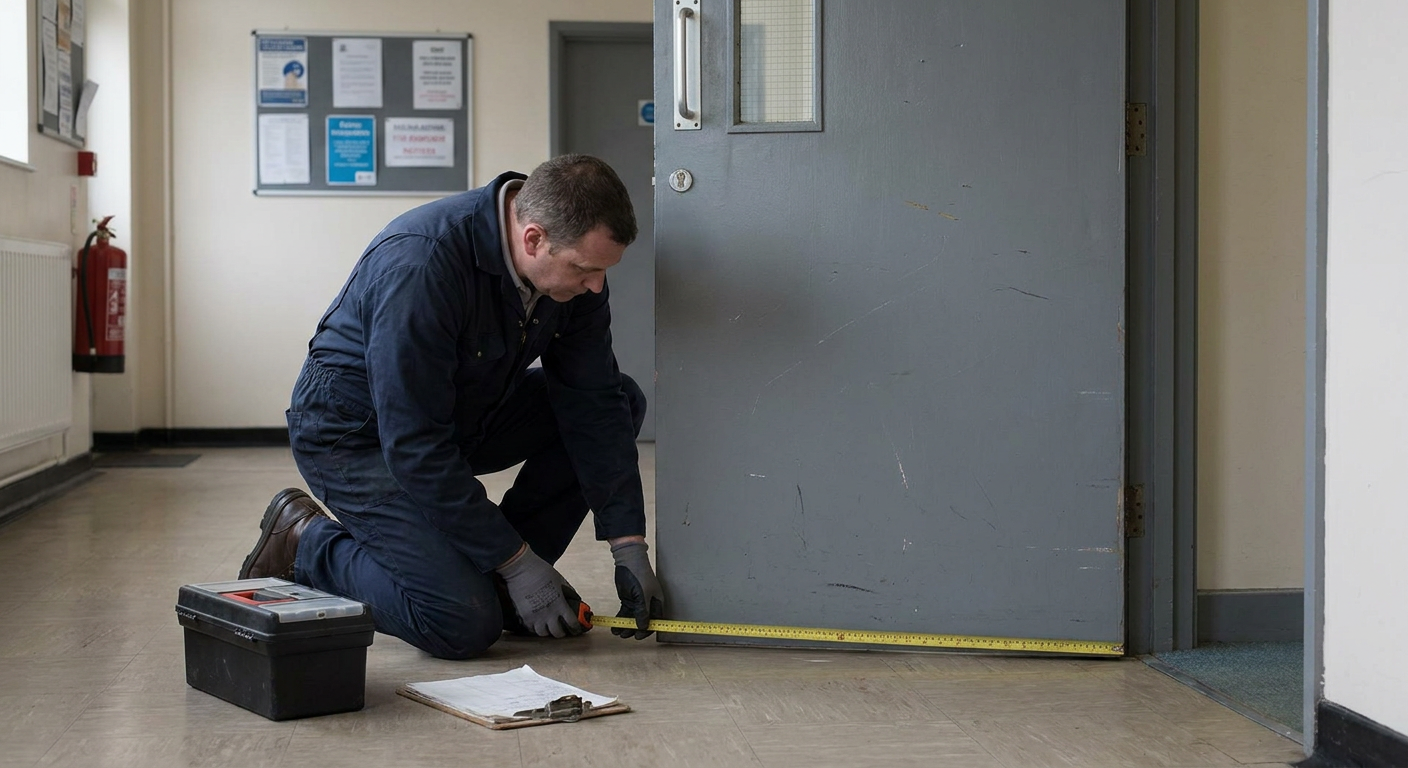
- Number of doors
- More doors take longer to examine individually, increasing the time the inspector needs on site.
- Communal versus flat entrance
- Checking doors inside individual flats requires coordinating access with residents, adding planning time.
- Type of building
- A purpose-built block and a converted Victorian house present different layouts and door types to assess.
- Condition of existing doors
- Heavily worn doors require closer examination of each component, extending the time spent per door.
The specialist explains the cost of your particular job before anything is agreed.
Do our fire doors need checking?
Wear, poor repairs and daily use degrade fire doors over time. A fire door gaps and seals check reveals problems you might miss walking past them every day. These signs suggest an inspection is due.
- 1
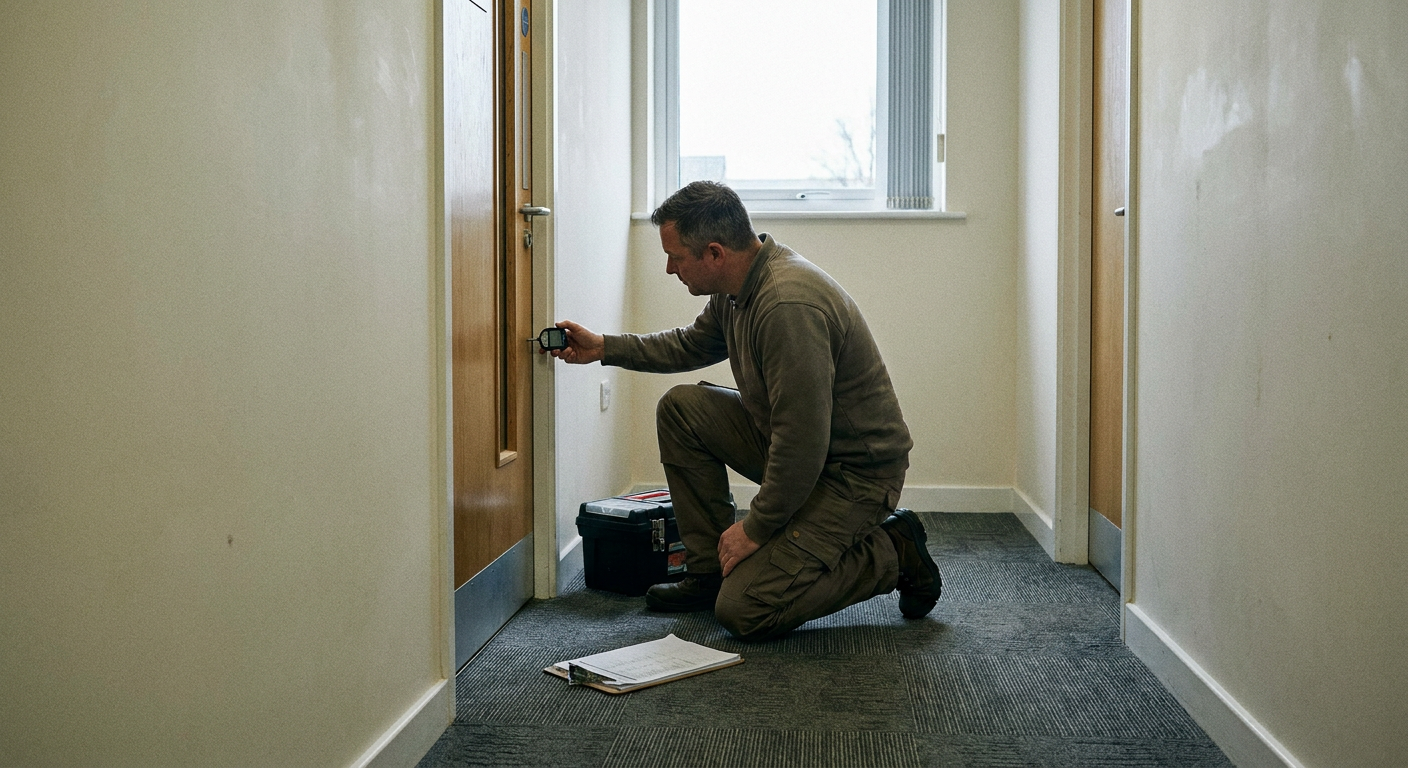
Visible light around the edges
Daylight showing between the door and frame suggests the gap has widened beyond safe limits, letting smoke pass through during a fire.
- 2
Missing or painted-over strips
Intumescent strips hidden under thick paint or peeling away from the rebate cannot expand properly when exposed to heat.
- 3
Door does not close on its own
A self-closer that leaves the door ajar, or one that slams it shut, means the mechanism needs adjusting or replacing.
- 4
Cracked or wrong glass
The specialist checks the marking etched into the corner of the pane to confirm it carries the correct rating.
After the visit
What happens after the inspection
You receive a fire door report for the block detailing every door examined. The schedule states which components can be repaired and which doors have deteriorated to the point of needing full replacement. This forms your baseline record for future reviews and enforcement checks.
Flat entrance door inspection in Berkshire blocks covers doors inside individual flats as well as those in shared corridors. Residents need to let the inspector in on an agreed date so every protected route is accounted for in the final document.
Remedial work is separate from the inspection itself. The specialist firm that carries out the checks does not do the repairs. You arrange your own joiner or contractor to fix the faults listed in the schedule.
Once you have a baseline, doors should be re-inspected at intervals set by current regulations. Guidance on how often fire doors need checking in Reading blocks depends on building height and occupancy type.
Areas covered for fire door inspections
Enquiries are taken for buildings across Reading and its surrounding suburbs, including Caversham, Tilehurst, Calcot and Lower Earley. The specialist travels to the site directly to carry out the work.
If your town is not listed, send an enquiry anyway. Coverage often extends further.
Tell us about the doors you need checked
Send the details of your building and the number of doors. There is no charge for the enquiry, and the specialist will respond with next steps.