Guide
PEEPs in Reading: supporting residents who cannot leave
A personal emergency evacuation plan sets out how a resident who cannot use the stairs will leave a building during a fire. Find out what the document contains, who writes it, and what the responsible person must arrange.
What a PEEP is and who needs one
Most residents can walk down a staircase when an alarm sounds. Some cannot. A person who uses a wheelchair, someone recovering from surgery, or a resident with a sight impairment may not be able to reach the ground floor without help. A personal emergency evacuation plan, known as a PEEP, records exactly how that person will leave the building.
The plan belongs to the individual. It names them, describes their limitation, and states what assistance they require. In a block of flats in Reading, the responsible person holds these documents. They are separate from the general fire strategy, though the two must align. If you manage a building where someone struggles with stairs, you need to know whether a PEEP exists for them.
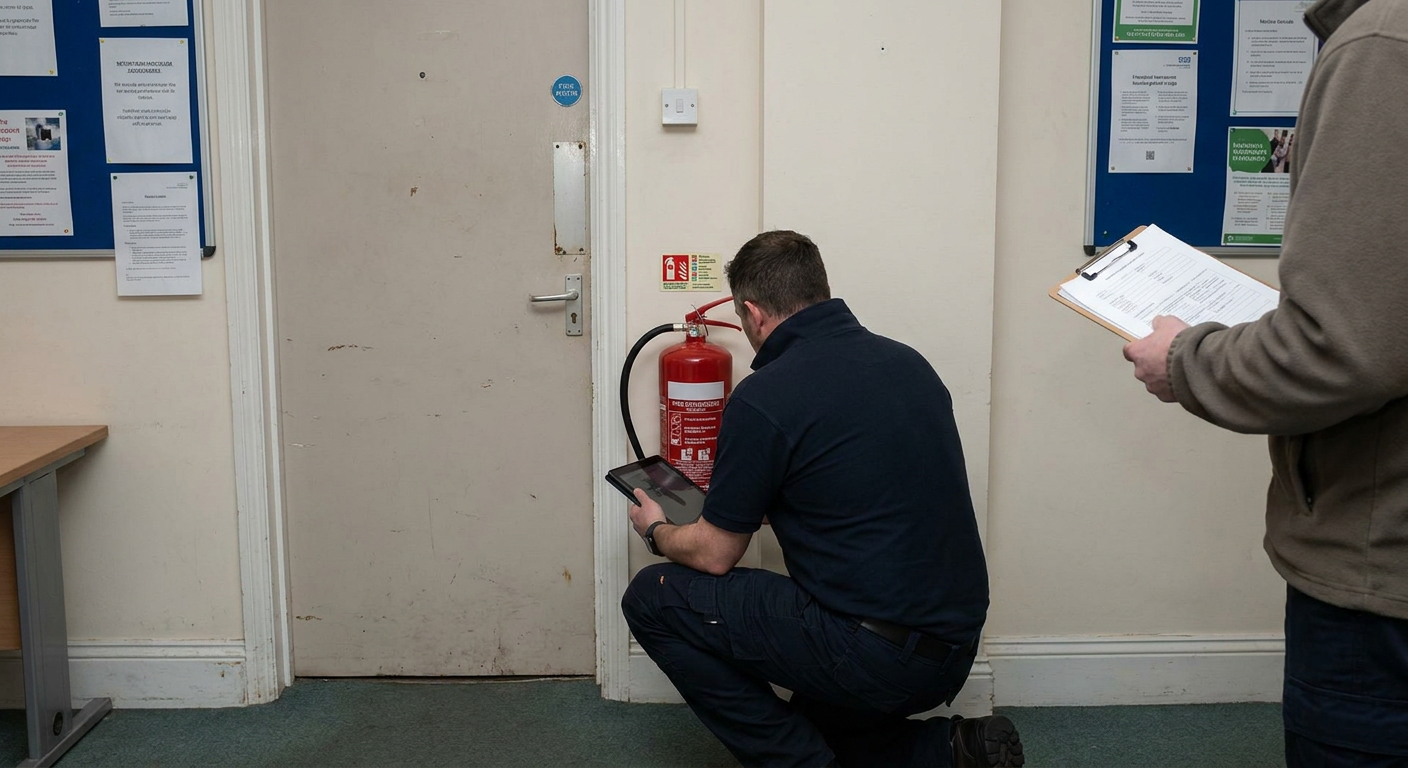
A specialist firm drafts the plan after speaking with the resident. The assessor asks what the person can do independently and where they need support. That conversation shapes the steps written into the document. You can read more about how these plans fit into wider fire risk management on the main guide to assessments.
What the plan contains
Every PEEP follows the same logic. It starts with the resident's location: which floor, which flat, which room they sleep in. It then maps the route to a place of safety. That route might involve a refuge area, a stairwell wide enough for an evacuation chair, or a lift designated for use during a fire.
The plan names the people expected to help. In some buildings, trained staff carry out this role. In others, the fire service is alerted to the resident's presence through a premises information box. The document specifies which method applies.
It also records equipment. If an evacuation chair is stored on the landing, the PEEP states its exact position. If the resident uses a powered wheelchair that cannot go down stairs, the plan explains the alternative arrangement. Nothing is left vague. A compartmentation survey often informs these details, because the time a resident can safely wait in a refuge depends on how well the surrounding walls and doors resist smoke.
Who writes and reviews the plan
The responsible person commissions the PEEP. That duty falls on the landlord, the managing agent, or the freeholder, depending on how the building is run. They do not write it themselves. A fire risk assessor with experience in residential buildings produces the document after visiting the site and meeting the resident.
Once written, the plan sits in the building's fire safety file. Copies go to the resident and to any staff named in the document. If the building employs wardens, those individuals receive specific instruction on their role. Warden training covers how to read a PEEP and act on it during a drill.
Plans expire when circumstances change. A resident who recovers mobility no longer needs the same level of support. A new occupant moving into the flat might require a fresh assessment. The responsible person should check each PEEP whenever the fire risk assessment is reviewed, and immediately after any change to the building's layout or alarm system.
PEEPs and simultaneous evacuation
Many older blocks of flats in Reading operate a stay-put policy. Residents not affected by the fire remain inside while the brigade tackles the blaze. But stay-put relies on compartmentation holding. If the building's structure cannot contain smoke, the policy shifts to simultaneous evacuation, meaning everyone leaves at once.
That shift changes what a PEEP must achieve. Under stay-put, the plan might only require moving the resident to a safer flat on the same floor. Under simultaneous evacuation, the person must reach street level. The distance is greater, the urgency higher, and the number of helpers needed increases.
Understanding which policy applies to your building is essential before commissioning a PEEP. The fire strategy document sets this out. If you are unsure whether your block should be operating stay-put or evacuating everyone together, a specialist firm can review the existing strategy and advise on the correct approach.
Arranging a PEEP for your building
If you manage a home or a block of flats in Reading and suspect a resident cannot evacuate unaided, the next step is to book an assessment. The specialist firm will visit the building, speak with the resident, and produce a written plan that meets current regulations.
You do not need to know the technical details beforehand. The assessor determines what type of PEEP is appropriate. For a temporary injury, such as a broken leg, a short-term plan suffices. For a permanent condition, the document becomes part of the ongoing fire safety arrangements.
Keep the plan accessible. Store it near the premises information box so the fire service can find it quickly. Ensure any nominated fire safety person knows where the documents are kept. A PEEP only works if the people named in it have read it and understand their part.
Ask about a PEEP for your building
Send the details of your building and the resident's situation. A specialist firm will review the information and explain what the assessment involves, with no obligation to proceed.
- No commitment required
- Local specialists respond
- Clear next steps given